
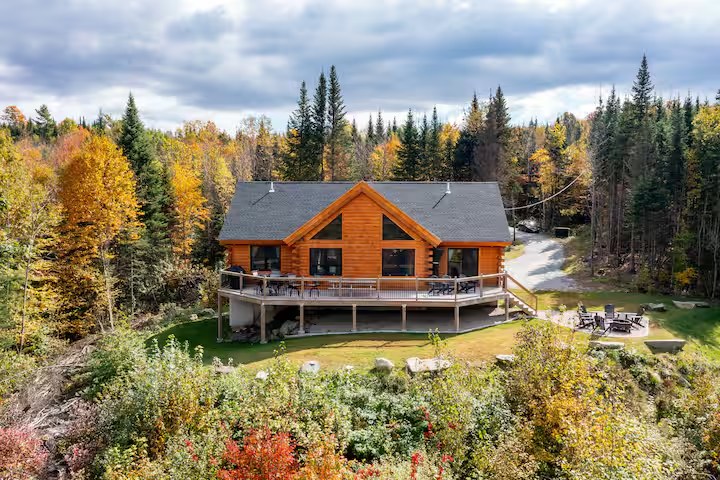
Search "do log homes require more maintenance" and you will get a wall of articles, and even Google's own summary, telling you yes, log homes are needier than a regular house. More upkeep. More sealing. Logs that rot, gap, and let in bugs and weather.
We are going to push back on that, honestly and with the reasons why.
The truth is this: a log home that is built right and stained right does not need more maintenance than a conventional home that has to be repainted. The reputation for high upkeep comes from homes that failed on one of those two fronts, not from log homes as a category. So let us walk through where the myth comes from, why our Eastern White Pine homes stay tight for the life of the house, and exactly how to stain one so it stays that way.
Where the "high maintenance" myth comes from
The reputation is not made up. It comes from real homes. Just not well-built ones.
Two things create a high-maintenance log home:
- The logs were never sealed tight against each other. On older or poorly built homes, the gap between each log course (called the seam) was left to chance. Air, water, and insects find those gaps. Once water gets between logs, you get the rot, the swelling, and the endless re-chinking that gave log homes their bad name.
- The home was never properly stained, or it was stained badly. Bare or under-protected wood weathers fast. So does wood that was sealed with a stain that got diluted on the way onto the wall (more on that later, because it is the single most common mistake we see).
Fix those two things at the start and the "log homes are high maintenance" story falls apart. That is exactly what a Merrimac home is built to do.
Why a Merrimac log home stays tight for the life of the home
Here is what actually happens between the logs on one of our Eastern White Pine homes, and why weather, water, and bugs do not get in.
Every log-to-log seam gets a three-part seal:
- Log foam gasket tape runs along the seam, a compressible foam strip that closes the gap as the wall is built.
- Weatherall caulking is run between the logs as a flexible, weatherproof sealant that moves with the wood and stays bonded.
- The logs are screwed down roughly every foot and a half, drawing each course tight to the one below it and keeping it there.
Foam tape, caulk, and a screw every 18 inches. That combination pulls the wall into a single tight system. There is no open seam for water to sit in, no gap for air to leak through, and no entry point for insects. And because Eastern White Pine is a stable, time-tested building wood, the wall stays put.
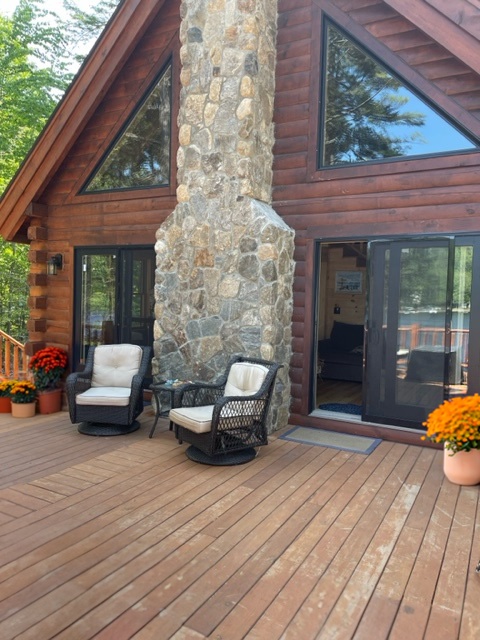
That is the part the generic "log homes are high maintenance" articles never mention. A wall built this way is not a row of logs hoping to stay close. It is sealed, gasketed, and fastened to last the lifetime of the home. No water, no bugs, no weather between the logs. It starts with logs that are milled right at our mill, so every course sits true against the one below it.
So once the shell is tight, the only real ongoing job is the same one any wood-sided home has: protecting the surface. Which brings us to stain.
So what maintenance does a log home actually need?
Less than the internet thinks. Here is the honest list:
- Stain and seal the exterior on a normal cycle (we will cover how often below).
- Wash the exterior once a year or so, a gentle wash to get pollen, dust, and cobwebs off before they hold moisture against the wood.
- Walk the home once a year and eyeball the south and west walls, the bottom courses, and anywhere water splashes or sits. Touch up stain where the sun has thinned it.
- Keep water away from the wood. Working gutters, decent roof overhangs, and a couple of feet of clearance from soil, mulch, and sprinklers. This is true of any home with wood near the ground.
That is genuinely it. Notice what is not on the list: re-chinking failed seams, replacing rotted logs, fighting insects in the walls. Those are problems of homes that were not sealed tight to begin with. In fact, no chinking is needed on a Merrimac home at all. The mortar-like stripe packed between the logs on old cabins is the part that cracks and fails over time, sending those owners back out to re-chink the seams again and again. Our foam-tape, caulk, and screw system seals the wall tight without it, so you will never have to re-chink the seams on the outside of a Merrimac home. Build it right and these problems never start.
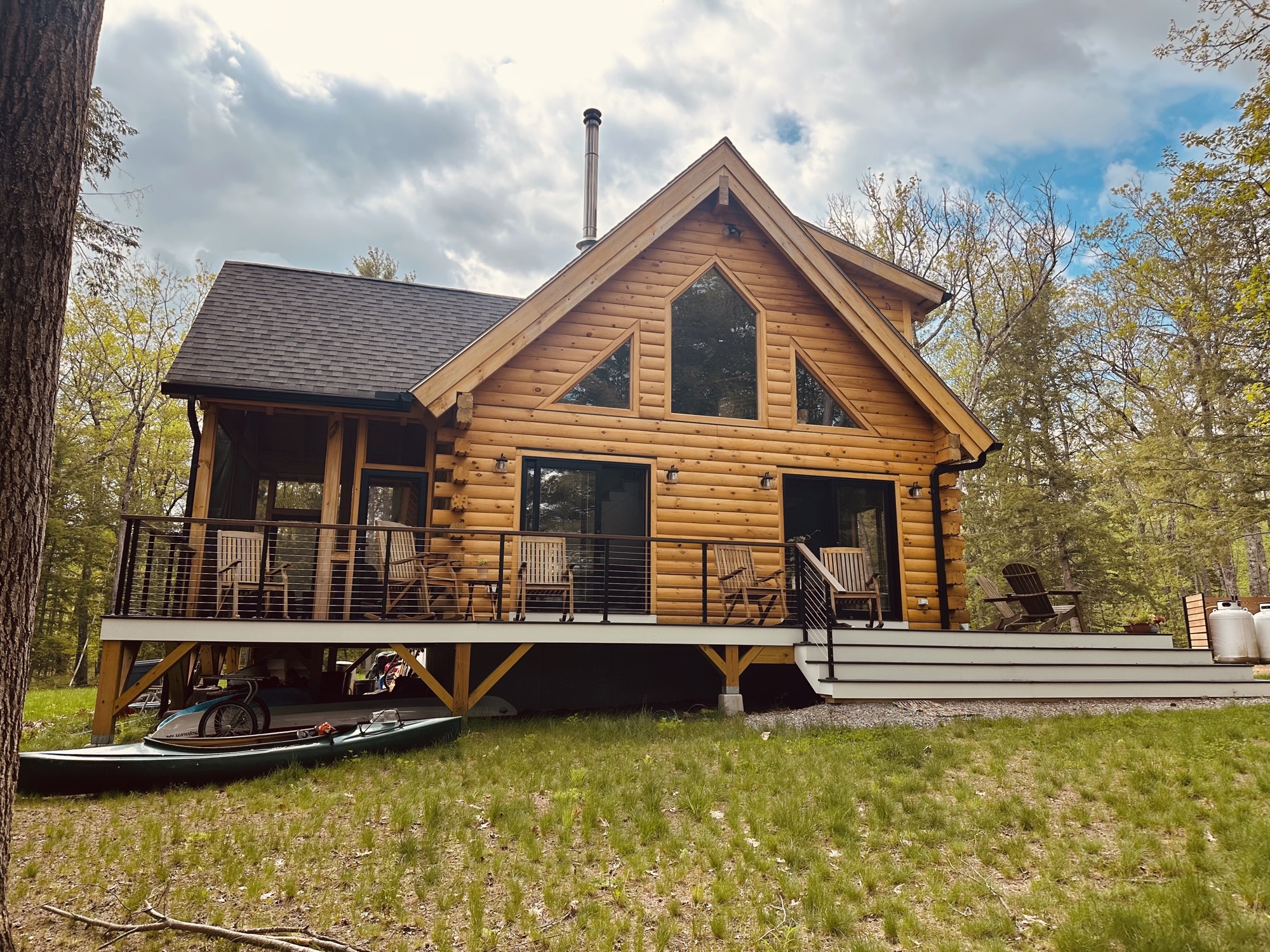
In other words, a properly built and properly stained log home asks about the same of you as a painted house does. A painted home needs repainting. A log home needs re-staining. Same idea, same rhythm.
How often should you stain a log home?
There is no single number, because it depends on exposure. Sun is what breaks down a finish, not age.
- South and west walls take the most sun and weather, so they fade first. These are the walls you will refresh soonest.
- North and east walls, and anything under a deep overhang or porch, are protected and last much longer.
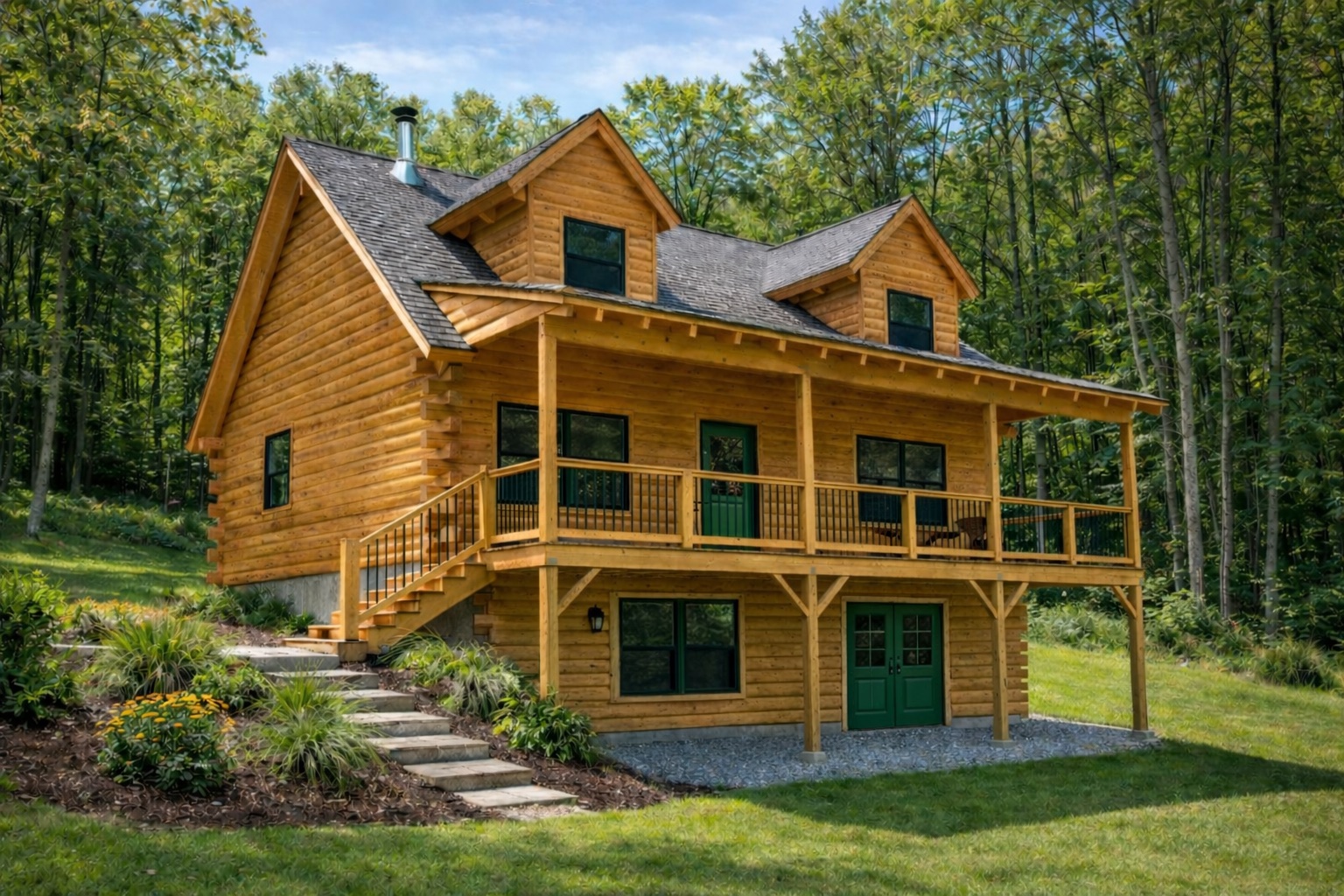
A practical way to think about it: your home will tell you. When water stops beading on a wall and the color starts looking thin or gray, that wall is asking for a coat. Many owners find they touch up the sun-facing walls every few years and do a full re-coat far less often than that. A home with good overhangs and a quality finish stretches those intervals out a long way.
Our log home experts have a simple test they always pass along: next time it rains, or just by running a glass of water down each exterior wall, watch what the wood does. If the water beads up and runs off, the finish is still doing its job, so leave that wall alone. If the water seeps into the logs, that wall is telling you it is time to restain. It takes about a minute per wall and it takes all the guesswork out of timing.
What does that look like in real life? We have seen both ends of the spectrum from our own customers. Some report a stain holding up for 7 years, and on more protected walls we have heard of finishes lasting a solid 10. The highly exposed walls, the ones taking direct sun and weather all day, might come due closer to 5. The range is wide because the exposure is wide, and that is the whole point: there is no one number that fits every wall, even on the same house.
The takeaway is not a magic number. It is this: stain it well the first time, watch the sunny walls, and touch up before the finish fails rather than after. Catching it early is a quick refresh. Letting it go gray is a strip-and-start-over job.
How to stain it right (this is the part that matters most)
Everything above depends on the finish actually doing its job. A great stain applied poorly will fail early. A good stain applied correctly will protect the wood for years. Here is how to get it right.
Pick a quality stain made for log and timber. A few that we and our customers have had good results with:
- Weatherall. The one we have traditionally used. It is a thick gel, so it has to be hand-applied with a brush. It is too thick to run through a sprayer, and that is by design. It puts down a heavy, protective coat.
- Ready Seal. A newer favorite we have heard good things about. It comes pre-tinted and is forgiving to apply.
- Outlast log oil. A lot of our customers over the last couple of years have used this for extra protection, with good reviews.
- Sikkens. A solid, more affordable option you can find at the hardware store.
Whichever you choose, follow that product's own application instructions. They are not all applied the same way.
The single biggest mistake: diluting the stain
This is the one we want every owner and every contractor to hear.
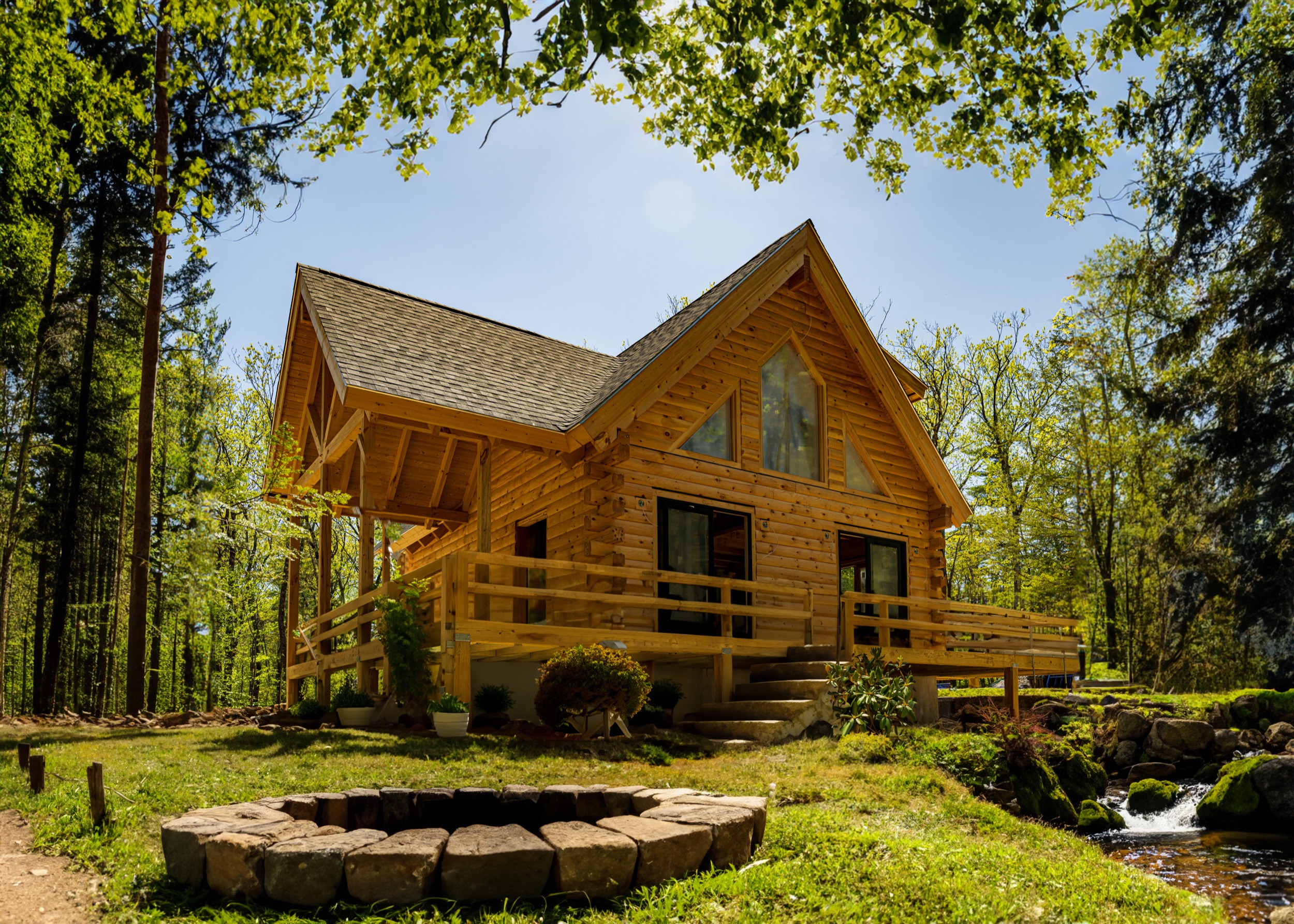
If your contractor is spraying the stain on, make sure they are not thinning or diluting it. Watered-down stain sprays faster, covers more wall per gallon, and looks fine the day it goes on. But it will not have the same longevity. You are trading a few hours of labor today for a finish that fails years early. Apply the stain at full strength, the way the manufacturer intended.
Back-brush if you spray. Spraying lays the stain on the surface. Back-brushing (going over the sprayed area with a brush) works it into the wood and into the grain, which is where the protection actually comes from. Spray-and-back-brush gives you the speed of a sprayer and the durability of a brushed coat.
Prep matters. The wood should be clean and dry before you stain. A new home gets stained on bare, sound wood. A re-coat goes on after a wash and full dry. Skipping prep is another way a good stain ends up failing early.
Do these things and your finish does its full job, which is the whole reason your maintenance stays low.
The honest bottom line
The internet will keep telling you log homes are high maintenance. For a lot of homes out there, it is even true.
It is not true for a home built the way we build them. Eastern White Pine logs, sealed at every seam with foam tape and Weatherall caulk, screwed tight every foot and a half, so the wall stays closed to water, weather, and bugs for the life of the home. Add a quality stain applied at full strength and refreshed before it fails, and you have a home that asks no more of you than a painted house does.
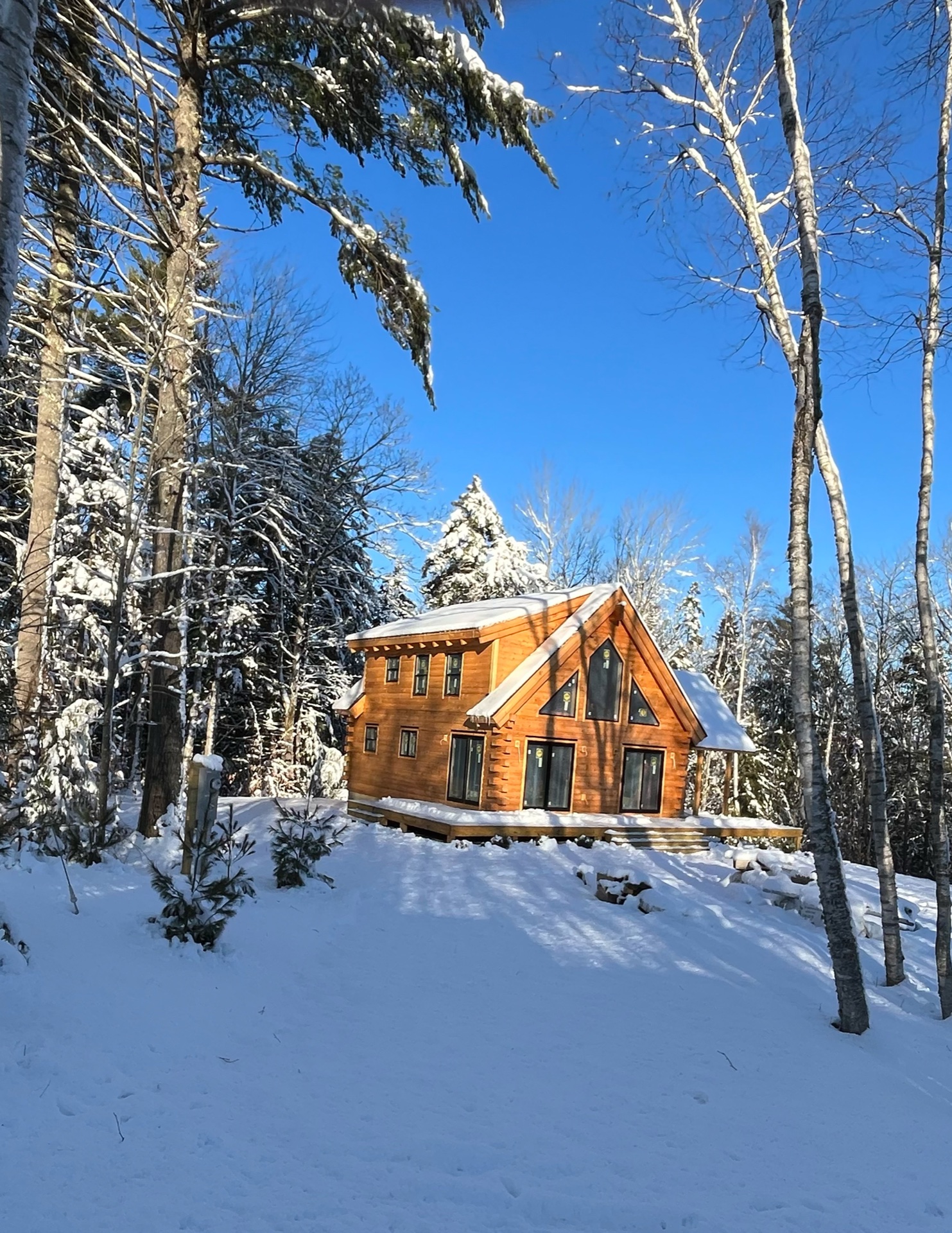
Build it right, stain it right, and a log home is not a maintenance project. It is just a home. That is the Merrimac Way.
📞 Building, or already own a Merrimac home and want advice on staining it right? Call us at 1-866-637-7462. We are always glad to talk through products, timing, and how to keep your home looking its best.