
Turning Pinterest and Inspiration Photos Into an Actual Home
Most homeowners don't arrive speaking in interior-design terminology.
They arrive with screenshots.
Maybe it's the kitchen from one house, the windows from another, a bathroom they saved three years ago, a color they saw on Instagram, and another home that they can't quite explain, they just like how it feels.
That isn't a problem. It can actually be the beginning of the design process.

When a client brings you a folder of different inspiration photos, how do you figure out what they're actually responding to?
"I find that the images people are naturally attracted to are little glimpses into their overall style. I look at all of those images together, but I also listen closely to how the client describes what they like about each one. Listening is honestly one of my best design tools." Alyssa Pierce, Willow & Sage Design
How do you turn a kitchen from one photo, windows from another and a bathroom from somewhere else into one cohesive home?
"I listen carefully to what the client has to say about each image and what specifically they're responding to. From there, I intentionally pull certain elements from those different inspirations and find ways to incorporate them into one overall design so everything feels connected rather than copied from different places."
What are you looking for to find the common thread?
"It's really about big-picture thinking. I can usually begin to see the overall direction the client is drawn to and identify the common threads between all of their inspiration images. Sometimes an inspiration image doesn't necessarily apply to the project or work with the architecture, even if the client loves it. Part of my job is figuring out what they love about that image and finding a way to translate that feeling or element into their home in a way that makes sense."
How do you carry that design language throughout the house without making every room look identical?
"I like to keep certain elements relatable from room to room without making everything too matchy-matchy. There should be a common thread throughout the home, but each space can still have its own personality."
And how do you avoid simply recreating someone else's home?
"Be creative! It's not about recreating someone else's home. It's about understanding what the client is responding to in those inspiration images and then interpreting those ideas in a way that works specifically for their architecture, property, lifestyle, and personality."
What Does a Modern Log Home Interior Look Like Today?
This is where the possibilities have expanded dramatically.
A modern log home can still celebrate the grain, craftsmanship and warmth of natural wood without requiring every interior surface to be wood.

How is the traditional idea of a log home interior changing?
"I think we're seeing a lot more mixing of drywall with V-match and other wood interiors. Instead of fighting the warm, yellow tones that pine can naturally develop over time, we can select paint colors and finishes that complement those tones.
We're also seeing more whitewashed pine on ceilings or accent walls rather than covering every wall in natural pine. I think the goal is to celebrate the structural and natural materials and allow their beauty to stand out without overwhelming the person experiencing the space."
What if someone loves the warmth of a log home but doesn't want the interior to feel like a traditional cabin?
"We start by layering in other finishes that complement the pine, timbers, or logs. You can still celebrate the warmth and natural character of the wood without making every surface feel rustic."
How do you define modern residential design today?
"To me, modern design today is about working with a few complementary tones, creating clean lines, and minimizing wasted space. It doesn't necessarily mean cold or stark. It can still be warm, textured, and inviting."
And what does "intentional interior design" mean to you?
"Intentional design, to me, means understanding the big picture and making individual design decisions that support that overall vision. Every selection should have a reason for being there and contribute to how the finished space ultimately looks and feels."
Mixing Wood Tones in a Log or Timber Home
One of the old design rules that can make a wood-heavy home feel particularly dated is the idea that every wood surface should match.
How do you mix wood species, grains and tones without making the interior feel disconnected?
"I actually think different wood tones can add a lot more character to a space. The key is understanding which wood tones complement one another. You don't necessarily need everything to match, but you do need to be mindful of the undertones and how the different species, grains, and colors interact within the same space."
For a custom log or timber home, that opens up far more possibilities for flooring, cabinetry, furniture and millwork, and creates opportunities for contrast rather than simply adding more of the same wood tone.
Texture: Let Natural Materials Work Together
Logs and timbers already bring grain and tactile character into a room. Rather than competing with that, other natural materials can help build on it.

Why do finishes like limewash, plaster, stone and handmade tile work so well alongside wood?
"The more texture, the better. Texture can have one of the biggest impacts on how a home feels, even though we may not always consciously realize it. Mimicking textures found in the natural world can make an interior feel calming and grounded, creating a space where people can decompress and feel comfortable."
It is the same idea that runs through this whole series: a modern log home does not have to choose between warmth and refinement. With the right mix of wood tones, complementary finishes, and natural texture, the logs and timbers become the foundation of the design rather than the entire design. If you are dreaming up a home like that, our team can help you start from a custom design or one of our existing models, and bring the right designer in at the right time.
About Alyssa | Willow & Sage Design
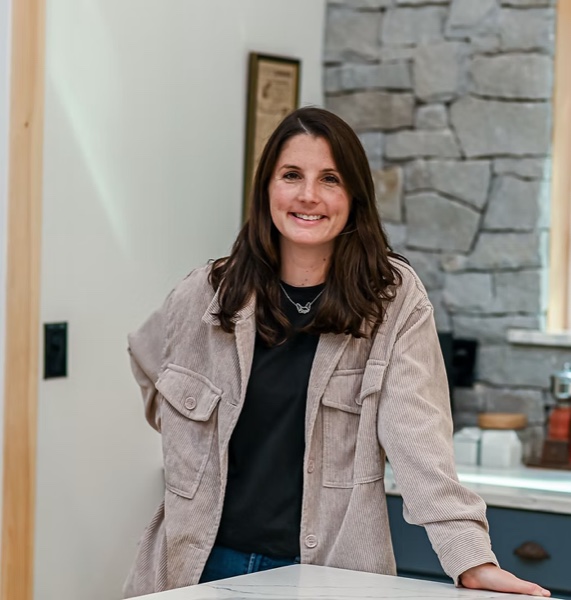
Alyssa Pierce is the owner and designer behind Willow & Sage Design, working with clients throughout New England. She combines a background in psychology, art therapy and interior architecture to create spaces that are both beautiful and thoughtfully designed around the people who live in them.
Learn more about Alyssa and Willow & Sage Design at willowandsagedesign.com or email her directly at apierce@willowandsagedesign.com.
📞 Ready to design a modern log, timber or hybrid home that is as intentional inside as it is beautiful from the road? Reach out at 1-866-637-7462 or start with our Custom Design page.