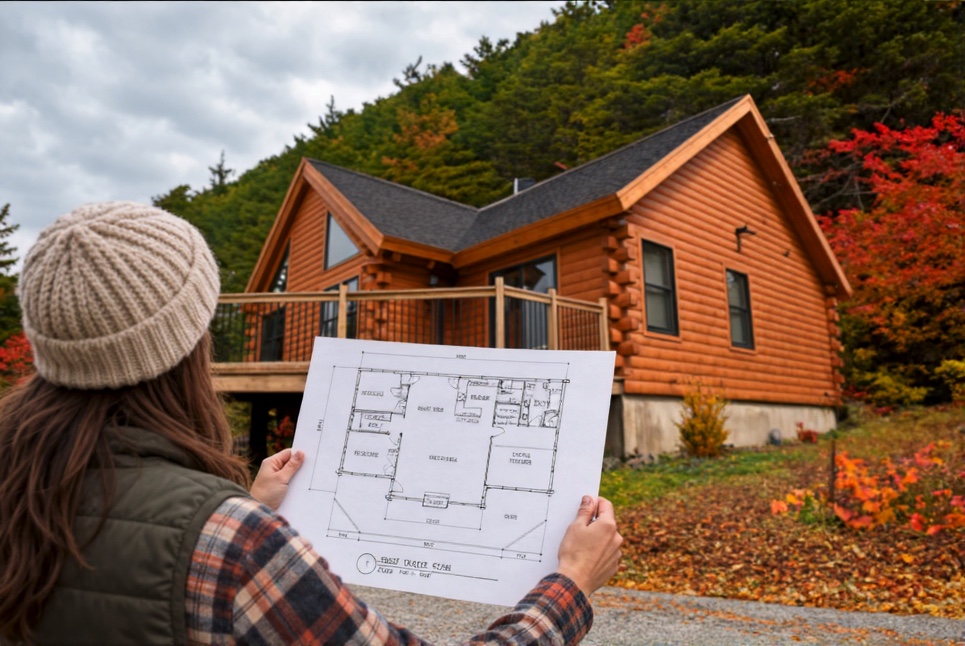
One of the first questions many future log homeowners ask us is: "Can I get a construction loan for a log home?"
The answer is yes.
Log homes can be financed with construction loans much like other custom, site-built homes. But building a custom home is very different from buying an existing house, and financing works differently too.
At Merrimac Log Homes, we've been helping customers turn plans into homes since 1978. We sell homes nationwide and have worked alongside customers using many different lenders across the country.
One thing we've consistently seen: our customers tend to have their best experiences working with a local bank, credit union or community lender that regularly handles construction loans in the area where they're building.
First: A Merrimac Log Home Is a Site-Built Home
This is an important distinction.
A Merrimac log home is not a modular home and does not come pre-assembled. We precision mill and pre-cut the logs for your home at our New Hampshire mill and coordinate the materials included in your exterior package. The home itself is then constructed on your building site on a permanent foundation, just like any other custom site-built home. Excavation, foundation work, plumbing, electrical, HVAC, interior finishes and other components of construction are completed on site.
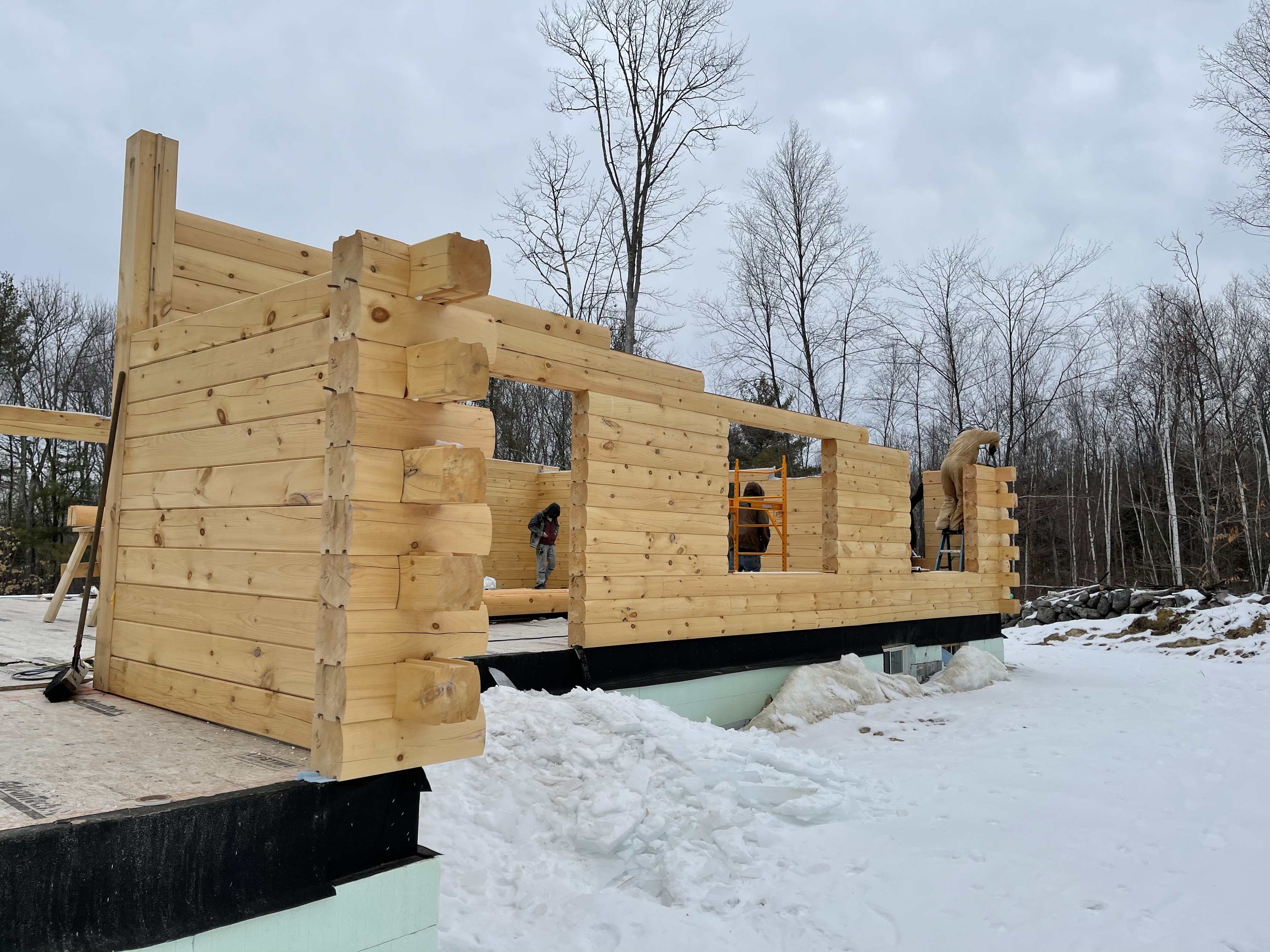
That means when you talk to a lender, you're generally discussing financing for the entire construction project and completed home, not just the Merrimac materials package.
What Is a Construction Loan?
A traditional mortgage finances a house that already exists. A construction loan finances a house that still needs to be built.
Instead of releasing the entire loan amount at once, construction funds are typically released in stages, often called draws, as the project progresses. Exactly how those draws are structured varies by lender.
This matters with a log home because a significant portion of the home's materials are manufactured and prepared before they ever arrive at the building site. At Merrimac, your logs are precision milled and pre-cut at our mill specifically for your home, and other materials in your package are ordered and prepared for your project.
Because of this, it's important for your lender to understand the Merrimac package, deposit requirements and payment schedule early in the financing process.
Different Types of Construction Loans
There are several ways construction financing can be structured. The options available will vary by lender, borrower and project, but some of the more common types include:
Construction-to-Permanent Loan
This finances the construction of the home and then converts into a traditional mortgage once construction is complete. Some lenders offer this as a one-time close, meaning the construction financing and permanent mortgage are arranged through a single closing.
Two-Close Construction Loan
The construction loan and permanent mortgage are handled separately. The first loan finances construction; once the home is complete, the borrower obtains separate permanent financing to pay off the construction loan. Because this involves two transactions, there may be separate closing costs, underwriting requirements and interest rates.
Construction-Only Loan
This provides financing specifically for the building period. Once construction is complete, the borrower generally needs to obtain separate permanent financing or otherwise pay off the construction loan.
Which Type Is Right for You?
There's no single construction loan structure that's right for every project. Interest rates, closing costs, down-payment requirements, draw procedures, builder requirements and permanent financing options can vary significantly between lenders. A qualified lender can walk you through which options fit your project and financial situation.
Why We Often Recommend Starting With a Local Bank
Merrimac sells homes nationwide, and our customers have financed their homes through many different lenders. While national lenders may offer construction financing, we've consistently seen customers have good experiences with local banks and credit unions near where they're building.
Why? Because local lenders understand the market where the home is actually being built. They're often familiar with:
- Local builders and contractors
- Regional construction costs
- Local appraisers
- Site-development costs
- Well and septic systems
- Rural building lots
- Local permitting and inspection processes
- Construction draw procedures
- Custom residential construction
They also tend to have more flexibility with projects that don't fit a one-size-fits-all construction model.
When a customer asks us where to start looking for construction financing, we usually suggest community banks and credit unions in the area where the home will be built. Ask if they regularly finance new construction and custom homes. If they've financed log homes before, even better.
The Typical Merrimac Financing Sequence
For most Merrimac customers, the process looks something like this:
- Choose or design your Merrimac home. Start with one of our standard Merrimac Log Home models and modify it to suit your needs, or work with us through the custom design process. Once the design is established, you'll have a clear picture of the home you intend to build.
- Receive your detailed Merrimac package quote. With the design established and modifications noted, we prepare a detailed quote outlining the materials in your package and the cost of that portion of the project. This gives you a defined number for the Merrimac portion of the build.
- Work with your builder or general contractor. Take the home design to your builder or general contractor so they can price the remaining construction, which may include:
- Site work
- Foundation
- Septic and well, if you're not on municipal utilities
- Framing and labor
- Plumbing
- Electrical
- HVAC
- Interior finishes
- Roofing
- Flooring
- Cabinetry
- Other subcontractor costs
- Additional site-specific work
- Bring the complete project to your lender. Once you have your home plans, Merrimac package quote and builder pricing, bring all of it to your lender. Those numbers give the lender a much clearer picture of the overall project.

What Should You Bring to the Bank?
Once your design is established and you have pricing from Merrimac and your builder, your lender may want:
- Your home plans
- Your detailed Merrimac package quote
- Your builder or general contractor quote
- Land information
- Site-work estimates, if separate
- Foundation estimates, if separate
- Well and septic estimates, if separate
- Other major project costs not included in the builder quote
The goal is to give the lender a realistic picture of the total cost to build the completed home. This is why we encourage customers to establish the design early. Once Merrimac, the builder and the lender are all looking at the same home, the numbers mean a lot more.
Start Talking to Your Lender Early
You don't need to wait until every detail is finalized before making initial contact with potential lenders. An early conversation can save you time later. Consider asking:
- Do you regularly finance custom home construction?
- Have you financed log homes before?
- How are construction draws structured?
- How do you handle payments for large material packages?
- What documentation will you need from Merrimac?
- What will you need from my builder?
- Does the builder need to be approved by the bank?
- How do you handle land that I already own?
- What will you require for the construction appraisal?
- How are inspections handled before draws are released?
- What happens when the construction loan converts to permanent financing?
The Merrimac Package Is One Part of the Complete Build
This is one of the most important things to understand when budgeting for a log home.
When someone asks "How much does a log home cost?" there isn't one simple number. Your Merrimac package is an important portion of the home, but it's still one part of the complete construction project. Depending on the property, total cost may also involve land, site work, driveway construction, foundation, well and septic, freight, builder labor, mechanical systems, interior finishes, cabinetry, appliances, decks, porches, garages, permitting and landscaping.
Every building site is different, which is why total project costs can vary considerably even between homes with similar floor plans. Your lender will generally want to understand both the Merrimac package price and the cost of completing the rest of the home.
The Appraisal Happens Before the Home Exists
One unusual part of financing new construction is that the lender needs to determine the expected value of the home before it's built.
With an existing property, an appraiser can walk through a finished house. With new construction, the appraiser generally works from your home plans, specifications, proposed materials and finishes, property information, construction budget and comparable properties.
That's another reason having an established design and detailed information about the home is valuable. A lender who regularly finances construction in your area is also more likely to work with appraisers familiar with custom homes and the local real estate market.
What If You Already Own Your Land?
If you already own your building lot, tell your lender early in the process. Depending on the lender and loan program, the value or equity in your land may factor into how the construction financing is structured. Exactly how that works varies significantly by lender and borrower, so your lender will need to explain how it applies to your situation.
Your Builder Is Part of the Financing Conversation Too
Merrimac manufactures and supplies your log home package. We are not the general contractor for the complete construction project. Your builder or general contractor is responsible for the construction work outlined in your agreement with them.
Because the builder plays such an important role in completing the home, construction lenders will often want information about the builder, which may include their experience, insurance, licensing where applicable, construction contract, project pricing and construction schedule. Some lenders also have their own approval process for builders.
That's another reason it can help to start identifying your builder while you're still developing your home and financing plan. If you're not sure how to find one, we wrote a full guide on how to choose the right builder for your log home.
Can You Be Your Own General Contractor?
Some customers want to manage their own construction project. Whether your lender will allow that is something to determine before planning around an owner-builder approach. Some lenders allow qualified borrowers to act as their own general contractor; others require an established builder. Requirements vary considerably, so ask potential lenders about their owner-builder policies early.
Why Planning Matters
There is a long list of individual decisions involved in building a custom home. At Merrimac, our goal is to work through as many of those details as possible before your package is delivered to the building site, including design, floor-plan modifications, window and door selections, log profile, structural components, roof system, material quantities and custom details.
Once those details are established, your plans enter our mill. Your logs are precision milled and pre-cut specifically for your home and individually labeled for their location within the structure. Window and door rough openings are cut according to your selections, and detailed pre-cut plans accompany the package.
It all starts with planning. And good planning doesn't only help your builder. It gives you a more clearly defined project, a more accurate Merrimac package quote, and better information to bring to your lender. That's part of what we call The Merrimac Way.
Look Beyond the Interest Rate When Comparing Construction Lenders
The financial terms of a loan matter. But when you're financing a custom construction project, the lender's experience with construction matters too.
A lender familiar with construction draws, large material packages, builders, inspections, appraisals and custom homes may have procedures built specifically for this type of project. When comparing lenders, ask about their construction lending experience, local construction knowledge, custom home experience, draw procedures, material payment procedures, inspection requirements, builder requirements, construction timelines, appraisal process, loan fees and permanent financing structure.
Looking at the complete financing experience, not just one part of the loan, gives you a much better comparison.
Where Should You Start?
If you're thinking about building a Merrimac log home, start with the home. Browse our standard models and find the designs that best fit the way you want to live. Remember that Merrimac models can be modified, so don't rule out a plan just because there's one element you'd like to change. Or if you have something completely different in mind, talk with us about designing a custom Merrimac home.
Once your design is established, we'll prepare a detailed Merrimac package quote outlining the materials included for your project. From there, your builder or general contractor can price the remaining construction. Then bring your home plans, Merrimac package quote, builder quote, and land and site information to your lender. That gives the lender a clear picture of the home, the material package, construction costs and the overall project.
And if you're beginning your search for construction financing, based on decades of customers building Merrimac homes throughout the country, a local community bank or credit union is often a good place to start the conversation.
Building Your Merrimac Home
The financing process becomes much easier to understand when you break it into steps:
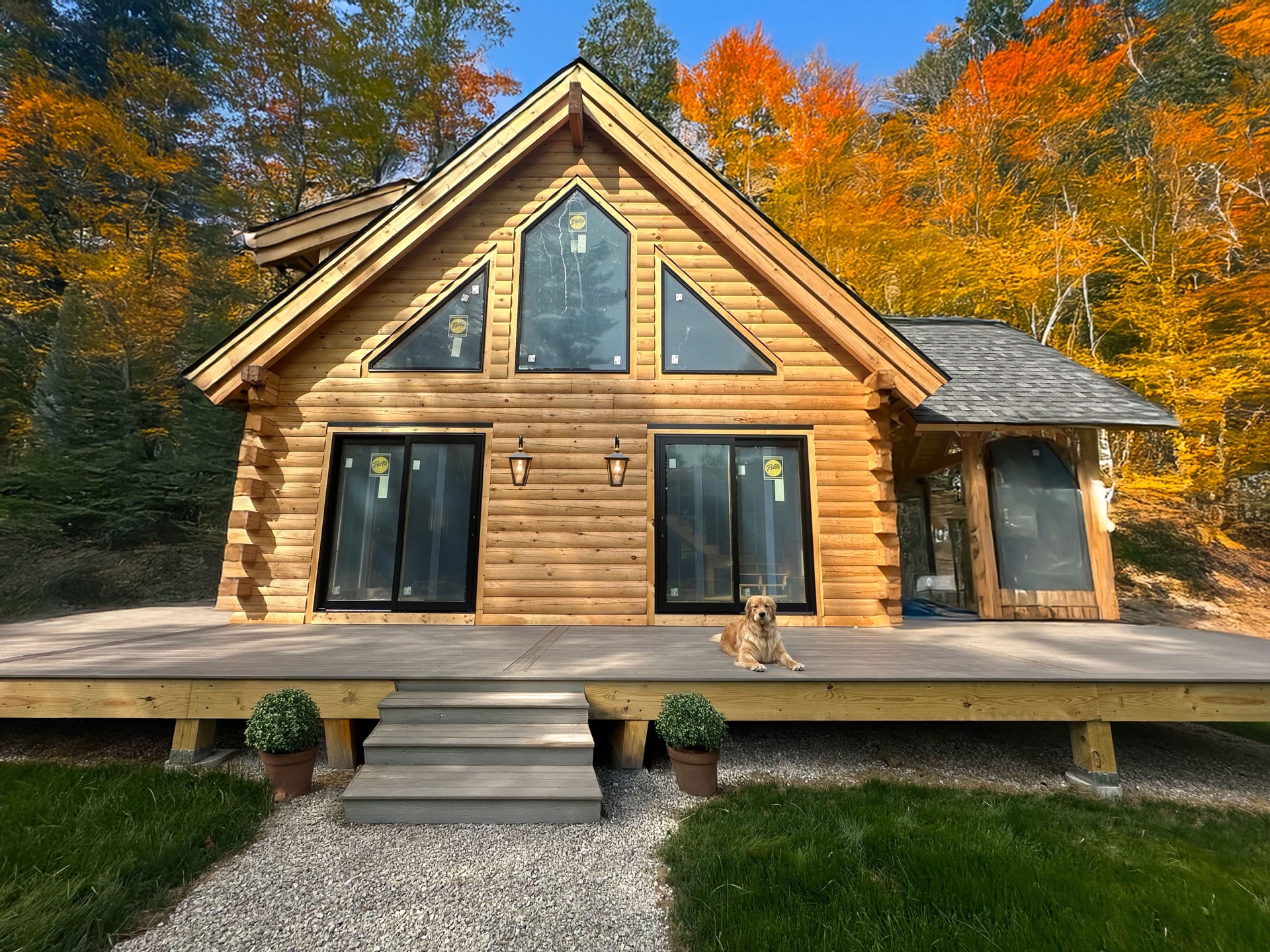
For nearly 50 years, Merrimac Log Homes has helped customers across the country take their homes from an idea on paper to a precision-milled package ready for construction. Your plans come into our mill. Your home leaves ready to build. That's The Merrimac Way.
Ready to Start Planning Your Log Home?
Explore our Merrimac Log Home models, modify one of our existing designs, or work with us to create a completely custom log home. Contact Merrimac Log Homes to start planning your project, or call 1-866-637-7462.
Nothing in this article constitutes financial, lending, mortgage, legal or investment advice, nor is Merrimac Log Homes recommending any specific lender, loan product or financing strategy.
Loan availability, underwriting standards, down-payment requirements, interest rates, appraisal requirements, construction draw procedures, land-equity treatment and other lending terms vary by lender, borrower, location and loan program. Always speak directly with a qualified lender or financial professional regarding your specific financial situation and construction project.