Most people think the hardest part of building a log home is finding a "log home builder." A specialist. Someone who has only built log homes their entire career.
Honestly? You don't need that. You need a good builder.
Since Merrimac started milling log home packages in the 1970s, we have worked with two kinds of builders: traditional log home builders with decades in the trade, and conventional stick-frame builders who had never touched a log wall in their life. Here is what we have learned over almost 50 years of shipping packages: if a builder is good, has solid customer reviews, and knows how to frame a conventional or timber frame roof, they can build a Merrimac home.
The log walls are the easy part.
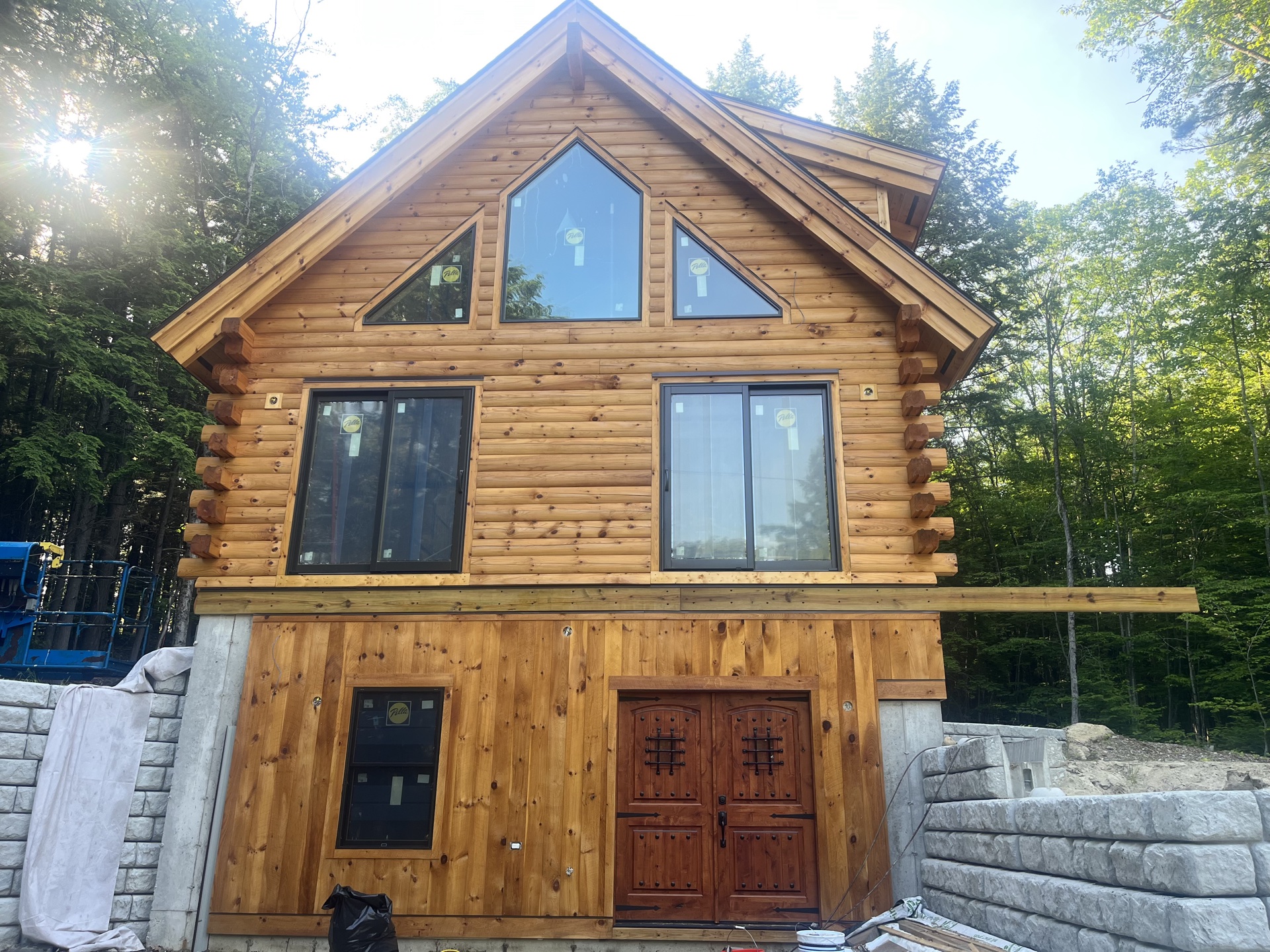
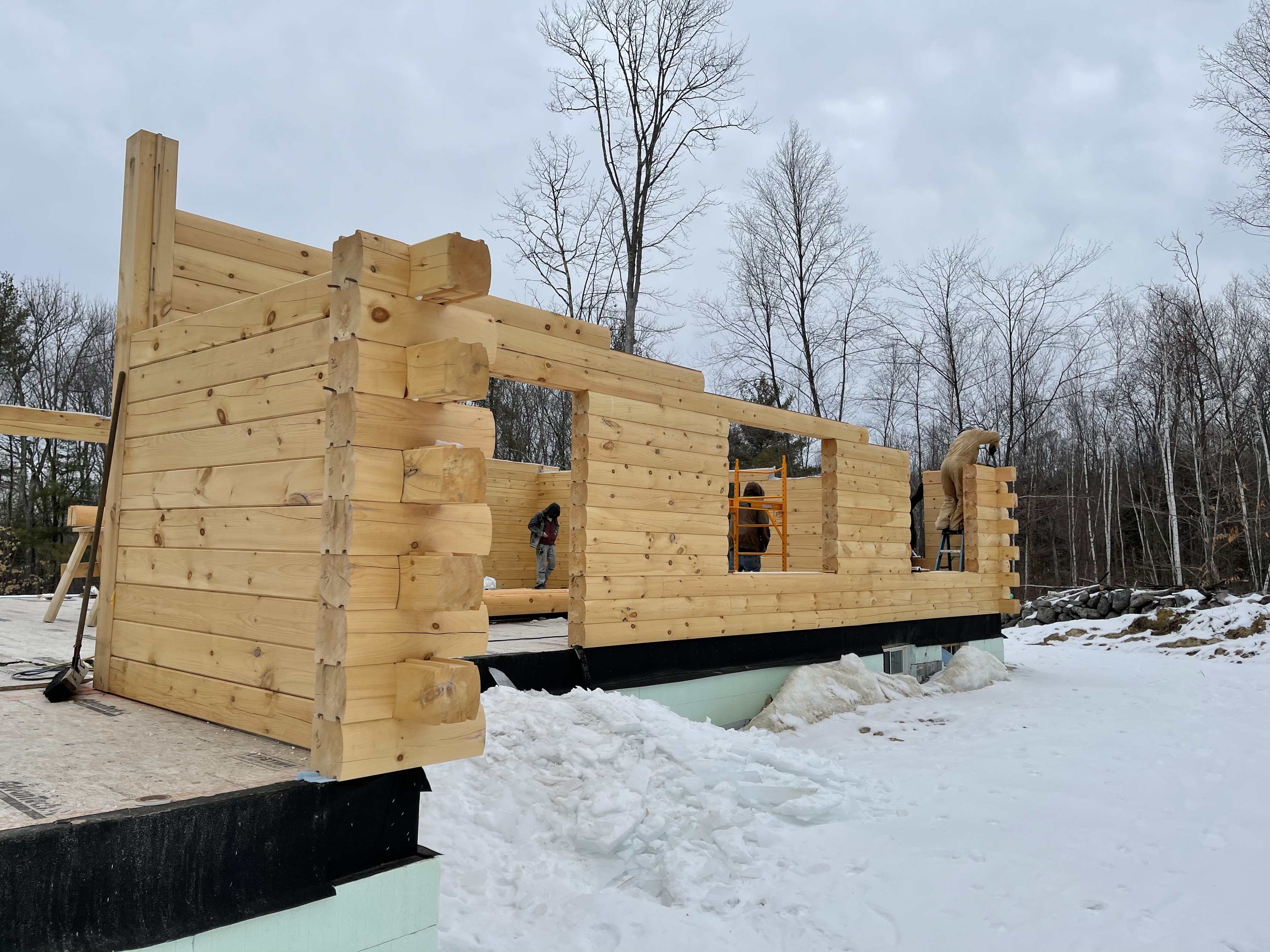
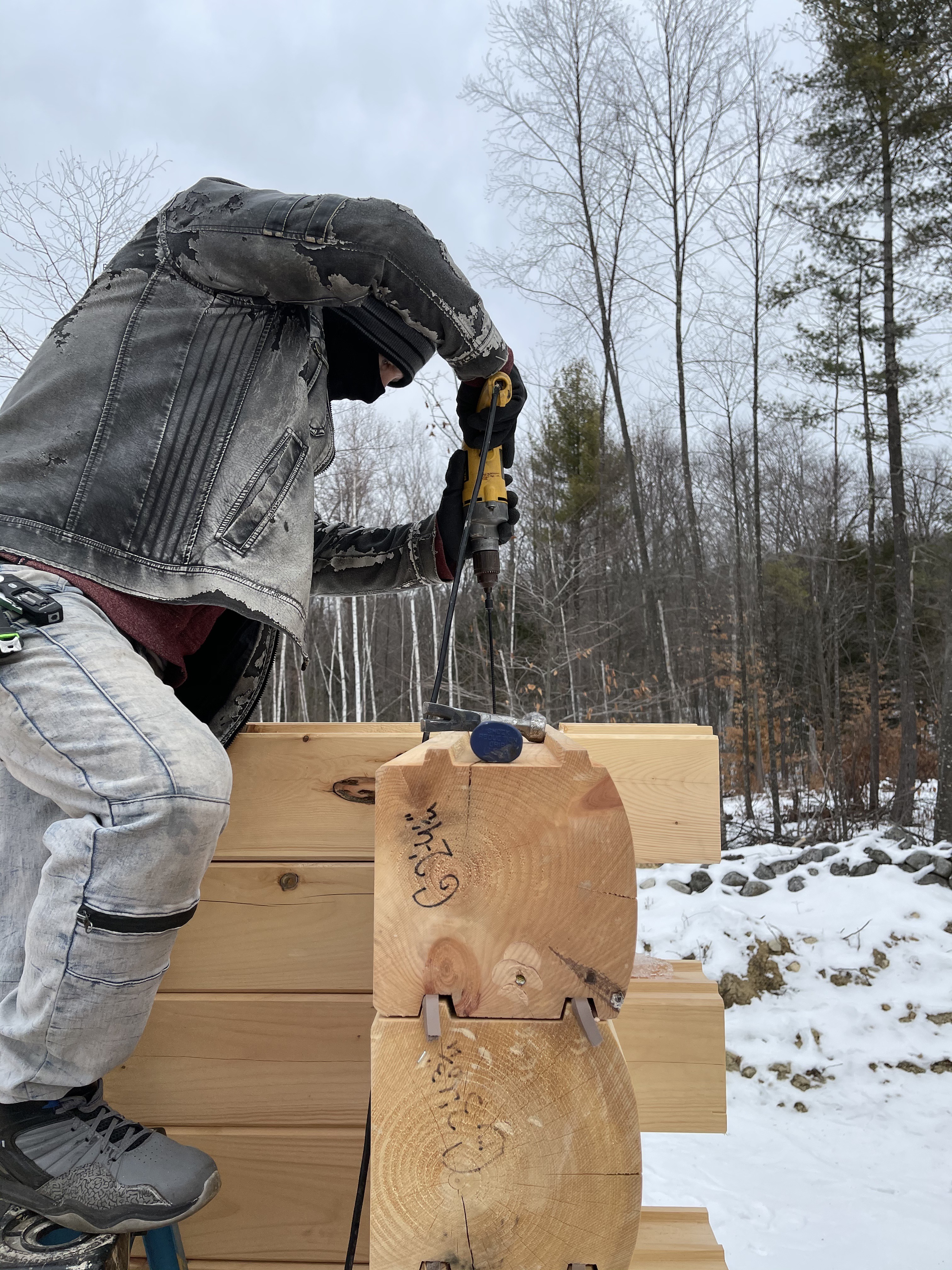
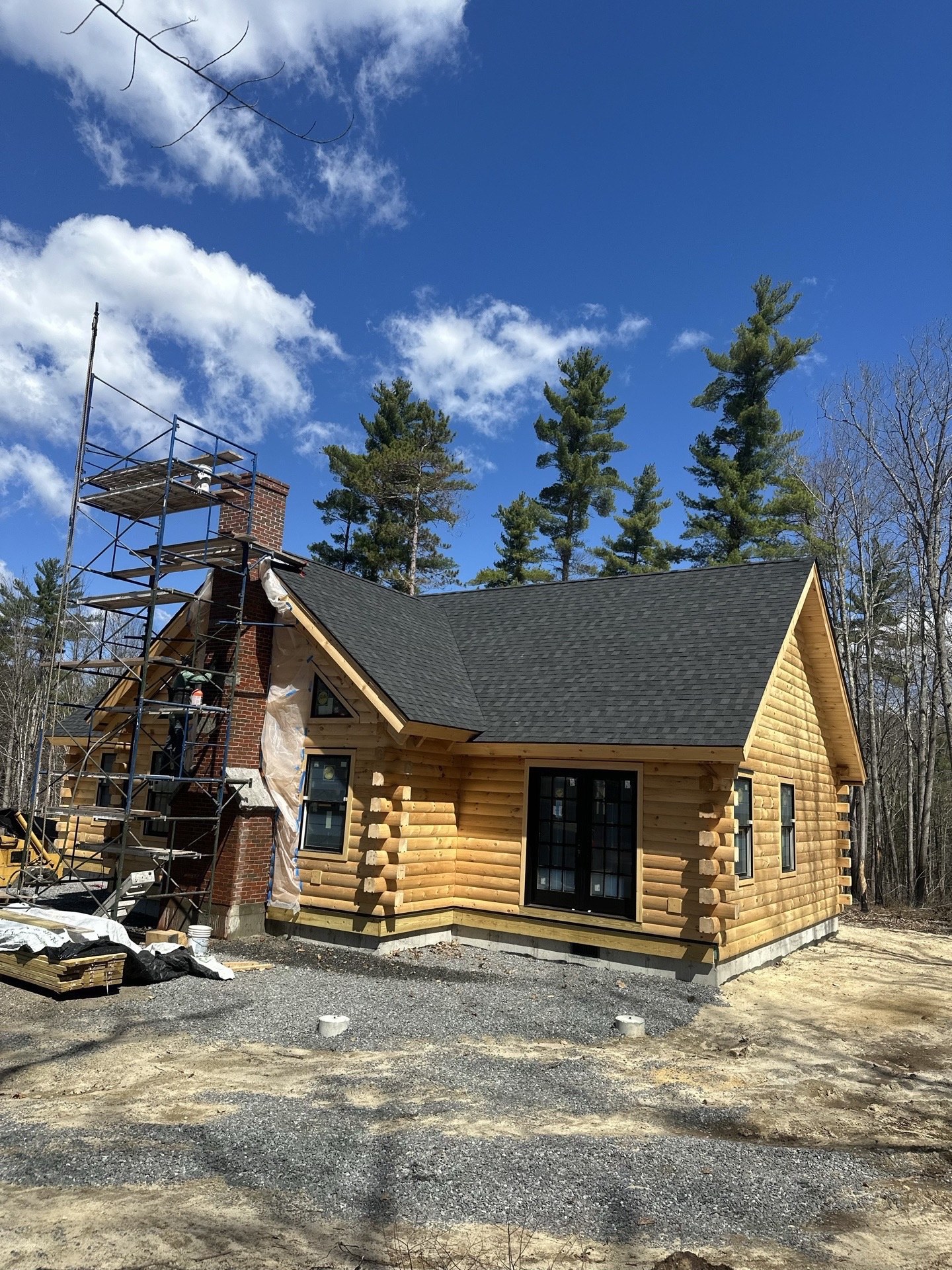
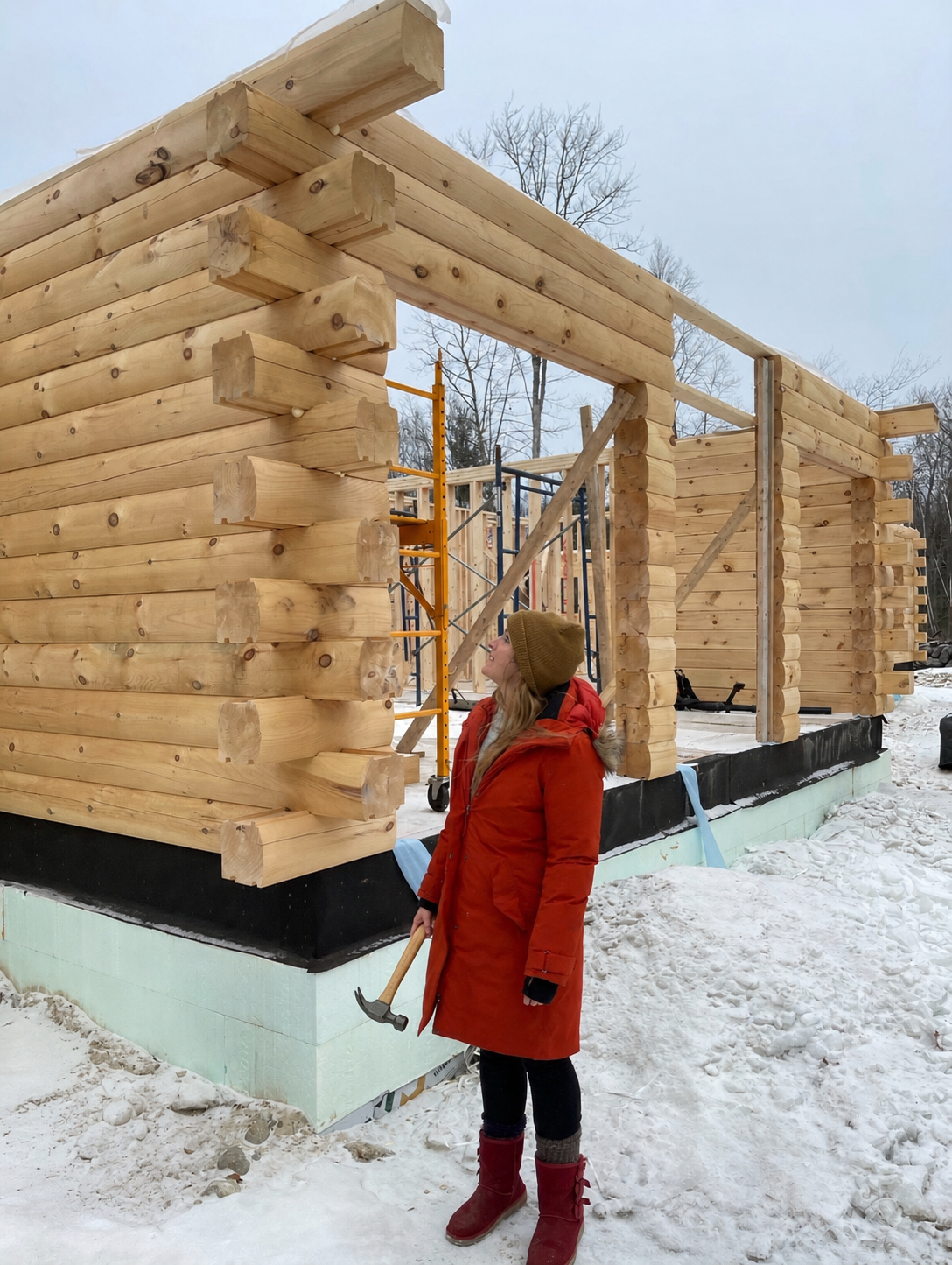
We know that sounds backwards. Most people assume the log walls are the hard, specialized piece of the puzzle. But at Merrimac, every log for your exterior walls is precut, lettered, and numbered at our mill in Henniker before it ever ships to your site. It arrives labeled. It comes with a precise schedule showing exactly which log goes where. It fits together like a puzzle. No chainsaws on the job site cutting rough openings. No figuring out tolerances. Your builder gets a complete construction-ready plan set and a kit that is ready to assemble.
That changes the math on who is qualified to build your home.
What actually matters in a builder
If you do not need a "log home specialist," what should you actually look for? Here is the short list, in order:
- A solid reputation in your area. Real, verifiable customer reviews. Recent projects you can drive by or homeowners you can talk to.
- Experience framing a roof system. Conventional stick frame, timber frame, post-and-beam, it does not matter. If they know roof systems, they can build your home. The log walls underneath are simpler than what they are already doing on every job.
- Attention to detail. Log homes, as with any home being built, reward careful work. You want a builder who measures twice, takes pride in tight finishes, and is not trying to rush through.
- Honest communication. Someone who returns calls, sends weekly updates, and tells you when something changes instead of waiting for you to find out.
- Willingness to collaborate with us. Your builder should be open to a Zoom call or a phone consultation with our team. The good ones welcome it. The ones who do not want to talk to the manufacturer are a red flag.
That is the whole list. Nothing about "20 years of log home experience" or "specialty log certifications." Just good builders doing good work.
Why our precut system makes this work
When a kit shows up at your site from Merrimac, this is what your builder is unpacking:
- Every log for your exterior walls, precut to the millimeter, lettered and numbered
- All rough openings for windows and doors, already cut
- A pre-cut schedule showing exactly where each log goes
- All the log construction accessories: caulking, foam tape, fasteners and log screws
- (If you ordered our Complete Exterior Package) windows, doors, roof framing materials, and everything else needed to close in the exterior
For a full breakdown of what is included in each package, check out our Packages page.
And critically, a complete set of construction-ready plans. Whether you chose one of our time-tested models or a fully custom design, your builder gets the same thing: a full architectural and engineering set ready to build from. No guesswork, no improvising.
What that means in practice is your builder spends most of their time doing what they already do well: foundation, framing the roof system, finishing the exterior, coordinating trades. The log wall assembly fits inside the work they are already comfortable with.
That is why we are so confident about working with conventional builders. Not because log walls are difficult and they are "rising to the challenge." Because log walls, when they are precut and labeled like ours, are actually simpler than conventional framing.
Get two or three bids
Once you have a few builders you are considering, ask for bids from each. Two or three is the sweet spot, enough to compare without drowning in spreadsheets.
When you read the bids, look at:
- What is included vs what is quoted separately. A low number with a lot of "by owner" exclusions is often more expensive than a higher all-in number.
- Specific materials and brands. Vague specs ("standard plumbing fixtures") usually mean cheap fixtures and change orders later.
- The timeline. Realistic, or aggressive in a way that worries you?
- The level of detail. A thorough bid usually means a thorough builder. A one-page bid for a $400K home should make you nervous.
- The payment schedule. Are they expecting a huge deposit before any work starts? That is a red flag.
If one bid is dramatically lower than the others, do not assume it is a great deal. It usually means something is missing.
Questions to ask any builder you are considering
Bring these to every interview. The answers tell you more than the bid does.
About them
- Can I see three recent projects, ideally similar in size and scope to mine?
- Can I talk to two homeowners you finished for in the last two years?
- How long have you been in business? Are you licensed and insured? Can I see the certificates?
- Who will actually be on my job site day to day? (Sometimes the person who sold you on the bid is not the person managing the build.)
One practical note on insurance: if you are financing your build with a construction loan, your lender will require your contractor to be insured before they release funds. That is a hard requirement, not a suggestion, because the lender is protecting their investment in your home. And even if you are paying cash and are not subject to that rule, insurance still protects you the same way: it covers job-site injuries, property damage, and the kinds of mistakes that otherwise turn into lawsuits. Hire insured, always.
About the work
- Have you ever built a log home before? (It is fine if they have not. See if they are curious, not dismissive.)
- How many other builds will you be managing at the same time as mine? Will you be on site many times a week with a crew, or acting more as a general contractor who subcontracts the work out and shows up on site occasionally? How big is your crew?
- Are you comfortable joining a Zoom call or phone consultation with our manufacturer to walk through how the package goes together?
- How do you handle change orders? Written? Approved in advance? Or do you spring them on me at the end?
- What is your weekly communication routine? On-site walkthrough? Email update? Status call?
About the project
- Realistically, how long will this build take from foundation to certificate of occupancy?
- Where in that timeline do you typically run into delays?
- What part of this build worries you, and what part do you feel good about?
The last question is gold. A builder who can honestly tell you what worries them about the project is usually a great builder. The one who says "no problem, easy" has not really thought about it yet.
One more thing, and it might be the most important: you have to actually like them. Building a log home is a long-haul relationship. You will be in close, regular contact with your builder for anywhere from two months to a year, and on a larger custom project, sometimes longer. That is a lot of phone calls, a lot of site visits, a lot of decisions made shoulder to shoulder, and a lot of trust handed over for the home you have been dreaming about. So if you already have a good working relationship with a builder you trust, log home experience or stick frame, it does not matter, that is a real advantage and you should seriously consider using them. Someone you have already met, done your homework on with references, watched on a job site, and genuinely like is worth more than a perfect specialty resume attached to someone you cannot wait to stop hearing from. Trust your gut on this one.
What Merrimac brings to the relationship
We want to be really clear about one thing: Merrimac does not build the homes ourselves. We mill them. We design them. We deliver a precise, complete, precut log home kit to your site, along with a full construction-ready plan set and the technical support to assemble it. The actual construction is led by your general contractor.
What we do, though, is stay involved through the whole build.
We work with builders all over the country because we sell nationwide. Some have built dozens of Merrimac homes. Others are building their first one. Either way, we are available to your builder for as much technical support as they want:
- Phone calls to answer questions in real time
- Zoom or FaceTime walkthroughs while they are on the job site, where they can show us a corner they are working on and we can show them how to handle it
- Detailed installation guides that come with every package
- Direct access to our team for anything that comes up
Honestly, we prefer to be in close contact with your builder. We want them to understand exactly how our package fits together. The more they understand, the smoother your build goes. That is part of the Merrimac Way: we stay with our customers and their builders for the entire build, not just until the truck leaves the mill yard.
If you are not sure where to start finding a builder, we can also help you connect. We have worked with great contractors all over the country, and in many regions we can point you to someone who has actually built a Merrimac home before.
What you are getting either way
Whether you choose one of our time-tested models or design a fully custom home from scratch, your builder gets the same thing: a complete set of construction plans, a precise precut log home kit, and our team on call for the entire build.
So when you are interviewing builders, you do not need to look for someone who has been "specializing in log homes" for 30 years. You need to look for someone who is good, communicates well, and is willing to partner with us as your manufacturer. Find that person, and the build goes well.
The log walls are the easy part. We promise.
📞 If you would like help finding a builder in your area, or want to talk through your project before you start bidding, reach out at 1-866-637-7462 or visit our Custom Design page. We are happy to walk you through it.